Concepts
CoAutoResearch combines autonomous research with continuing human direction. The agent advances bounded research steps while the researcher can discuss findings, question conclusions and guide the next move. A shared record connects those decisions to evidence, limitations and the manuscript.
In v2.0, Markdown remains useful for people, but typed JSON and service-owned receipts determine control flow. An agent may propose work; it may not publish its own claims as canonical truth.
Recursive self-improvement
CoAutoResearch uses a recursive research loop: the record produced by one iteration becomes input to the next. The agent can revise its hypotheses, experimental methods and research decisions using recorded evidence, review feedback and reusable lessons. Human guidance can enter the same loop after the researcher reviews and sends it.
The design separates three forms of improvement:
What changes |
How it carries forward |
|---|---|
Research methods and decisions |
Recorded findings, limitations and comparisons inform subsequent plans and trials. |
Research process memory |
Focused notes retain reusable method, resource, process and human-preference lessons; stale notes can be superseded. |
Workflow instructions |
Recurring defects can produce instruction patch proposals with evidence, benefits, risks and proposed checks. Applying them requires explicit review and a managed template release. |
This is recursive self-improvement of the research process, not automatic training of the underlying model weights or unrestricted rewriting of the system. Each proposed improvement still needs evidence: a negative result, revised claim or decision to stop can be the right outcome. The original resource limits and human approval conditions continue to apply.
The implementation rules live in NOTES_AND_SELF_IMPROVEMENT.md, with knowledge
capture checked by the process reviewer. Managed instructions are not silently
rewritten during a research trial.
System architecture
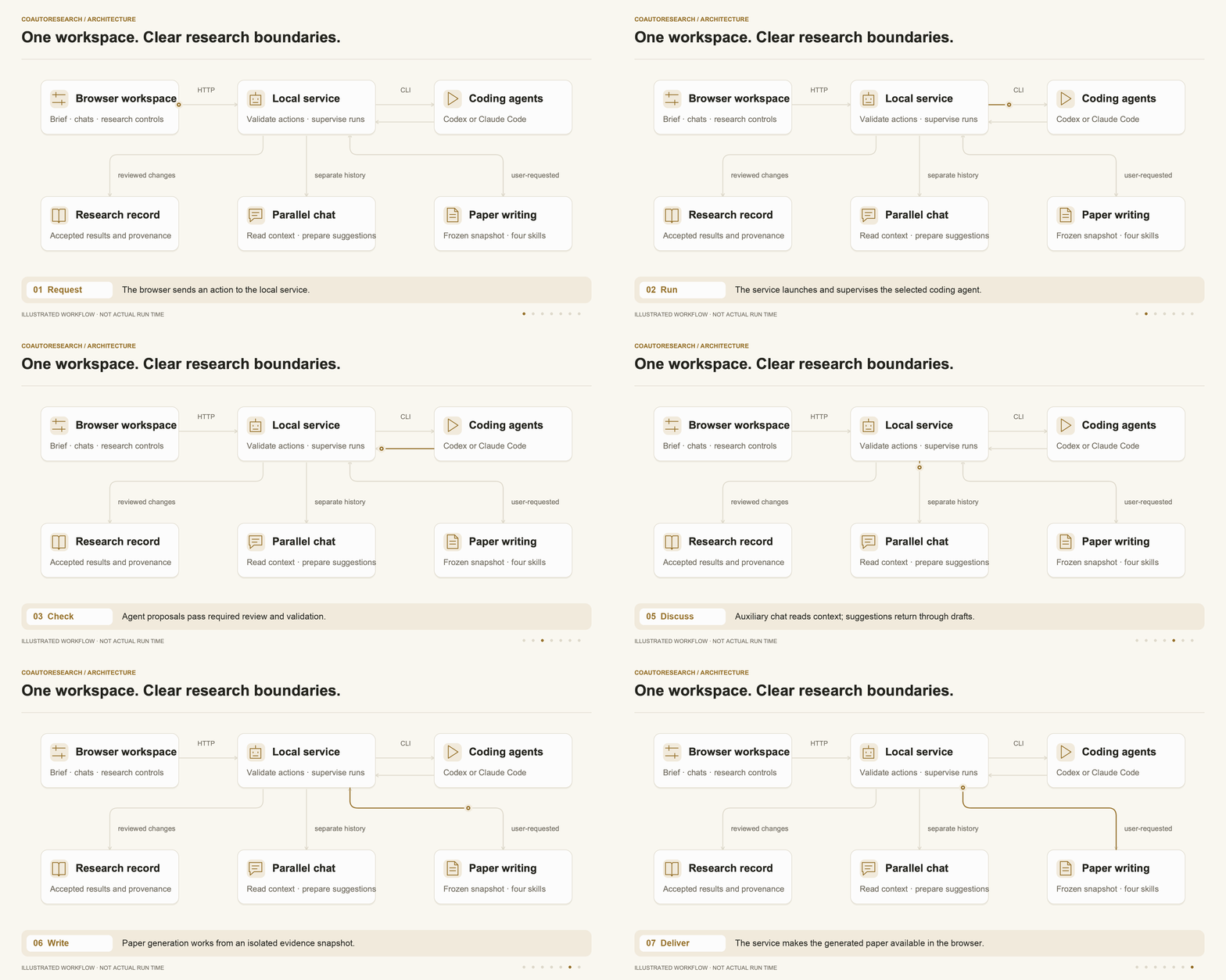
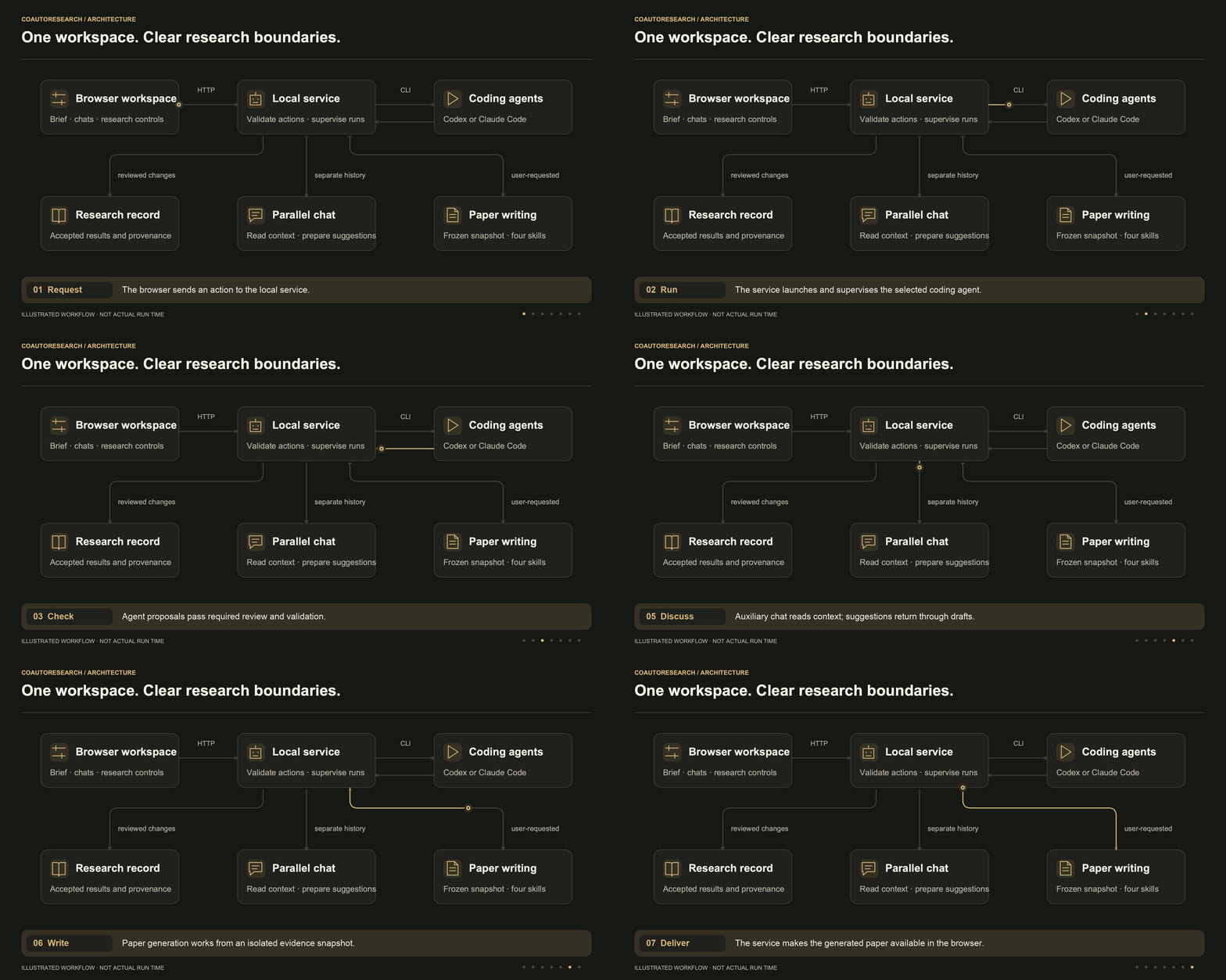
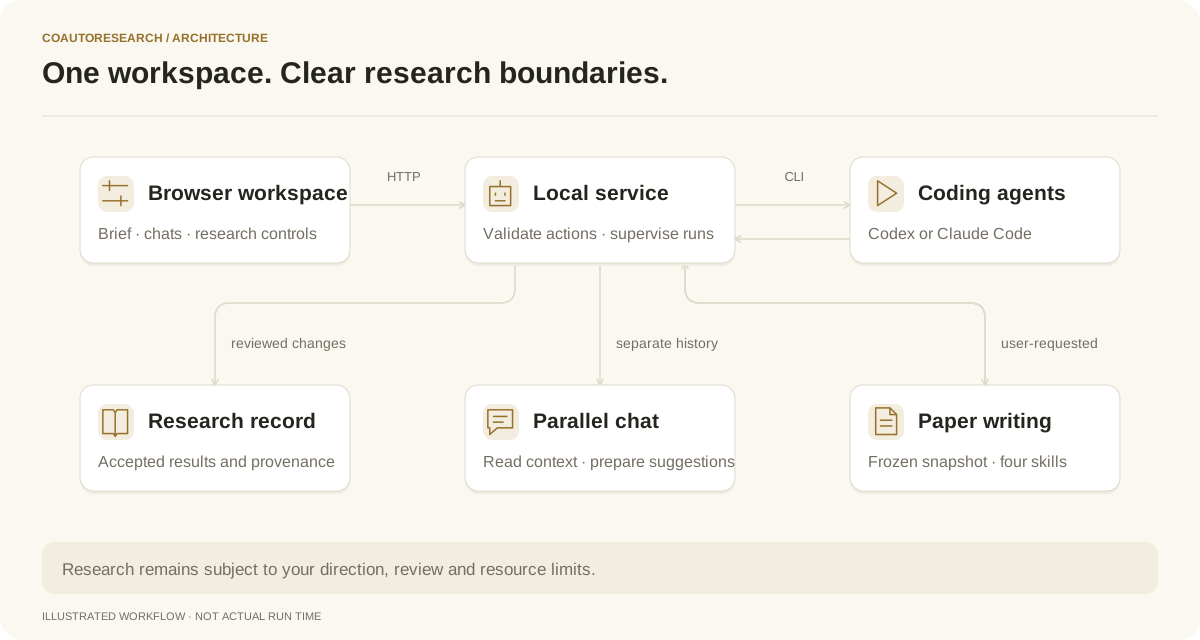
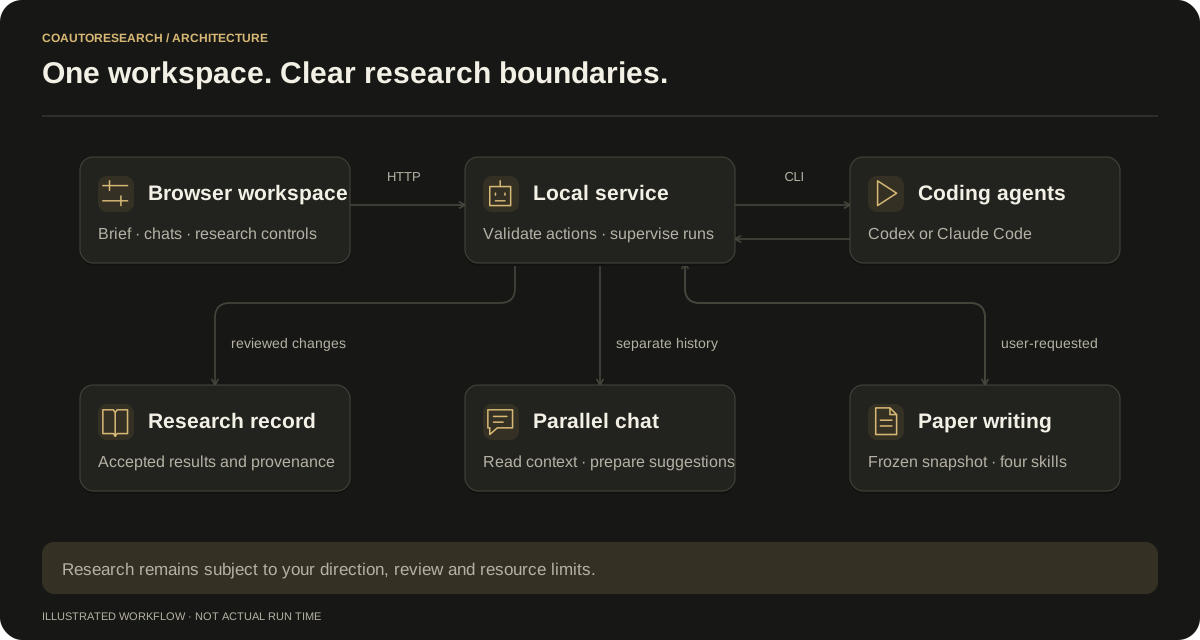
Illustrated workflow; timing is schematic. Static diagram.
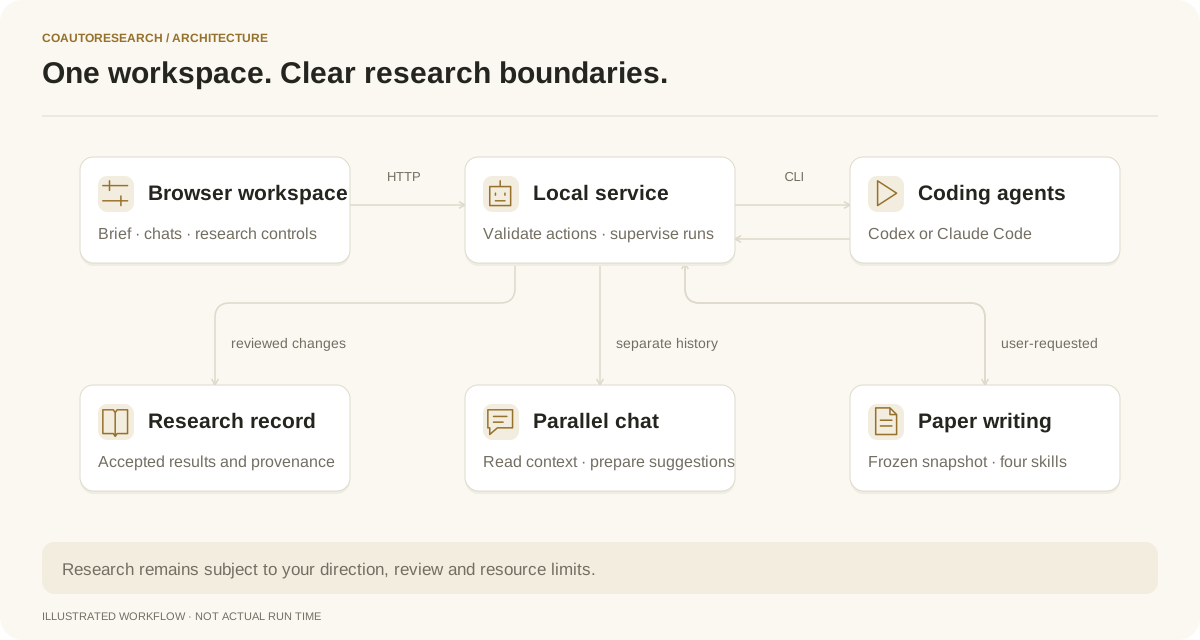
The browser sends controls to the local service. The service supervises the selected coding-agent CLI and records accepted research changes. Discussion keeps its own history; paper generation uses a separate evidence snapshot. Research data remains in the configured project folder. Context sent to the selected model is processed by that provider.
Research Loop
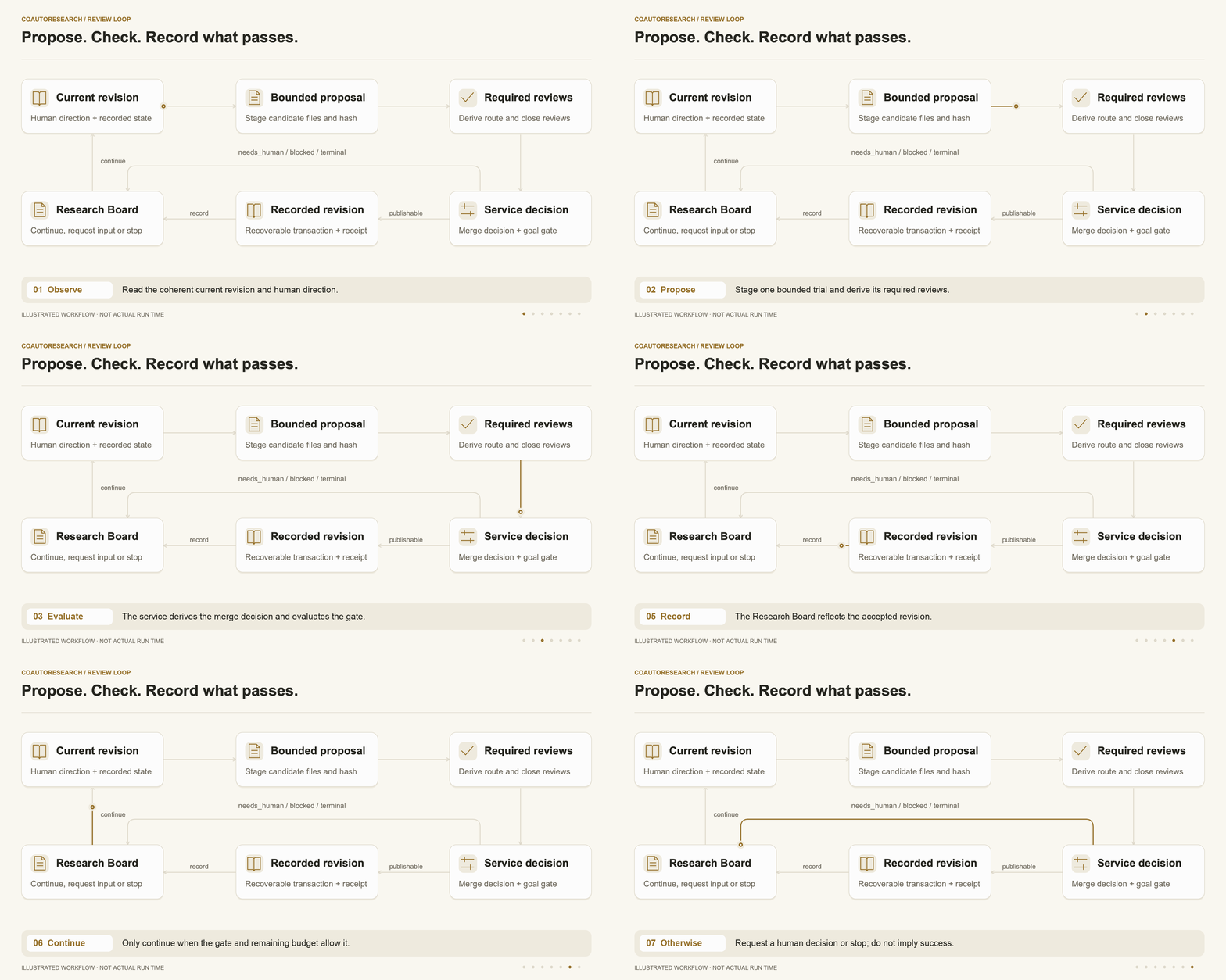
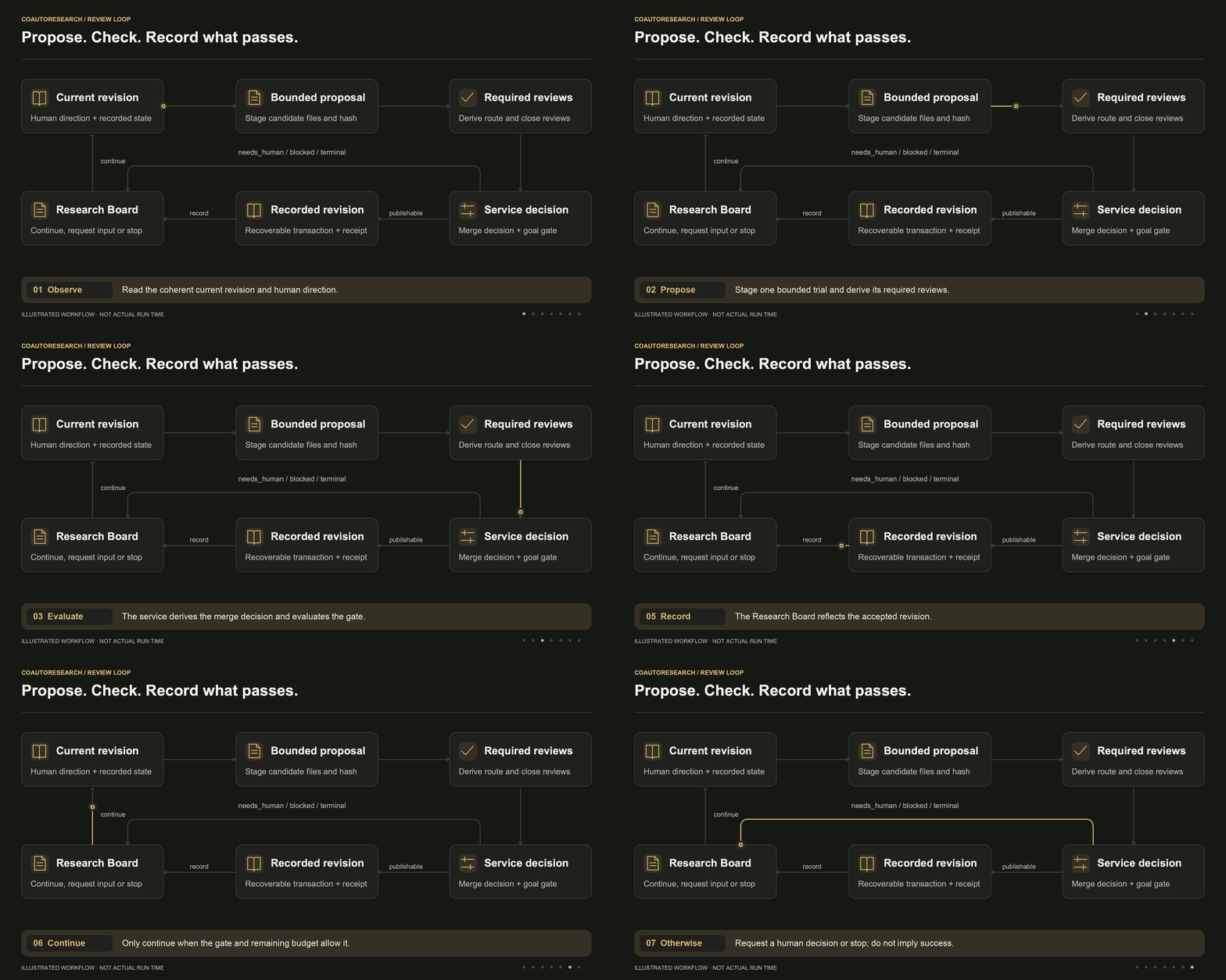
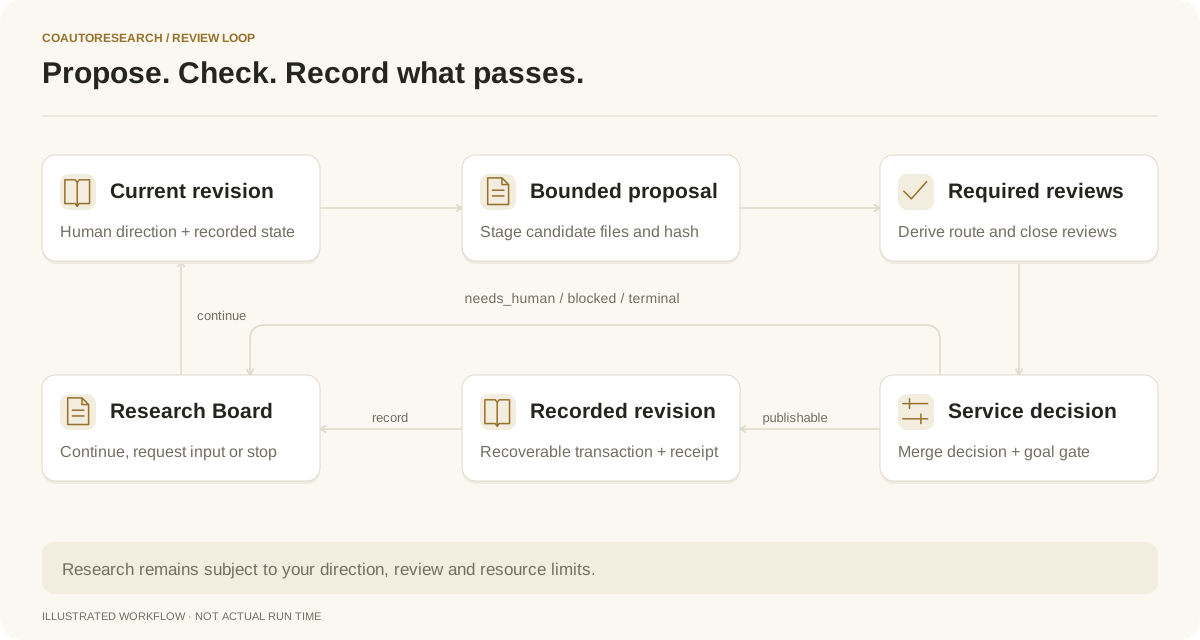
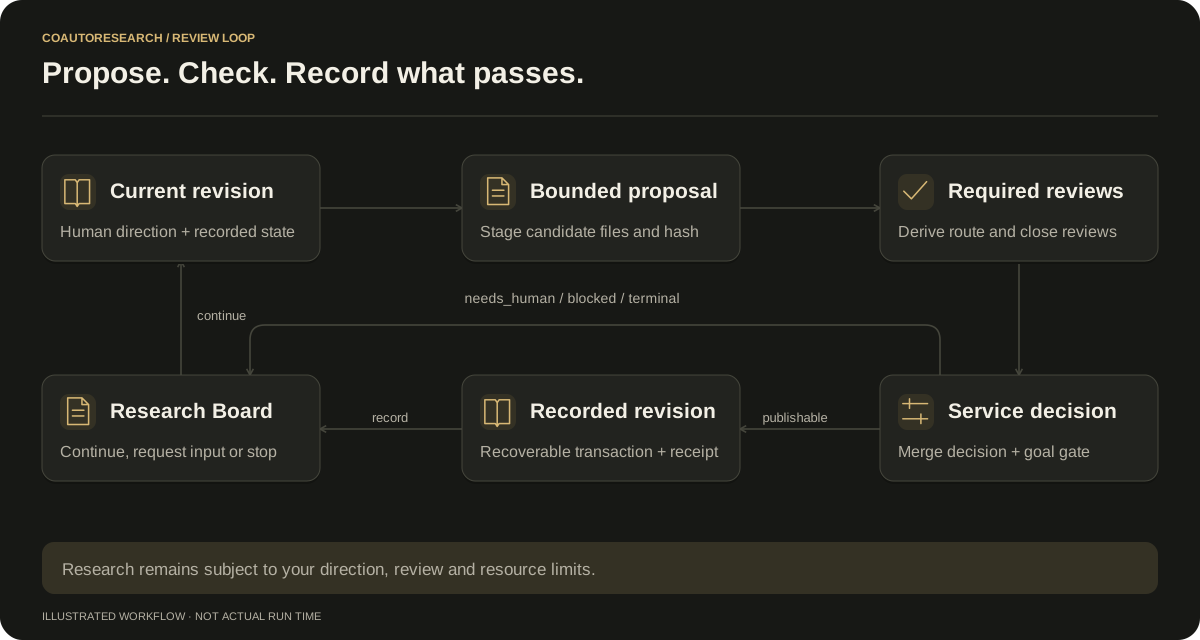
Illustrated workflow; timing is schematic. Static diagram.
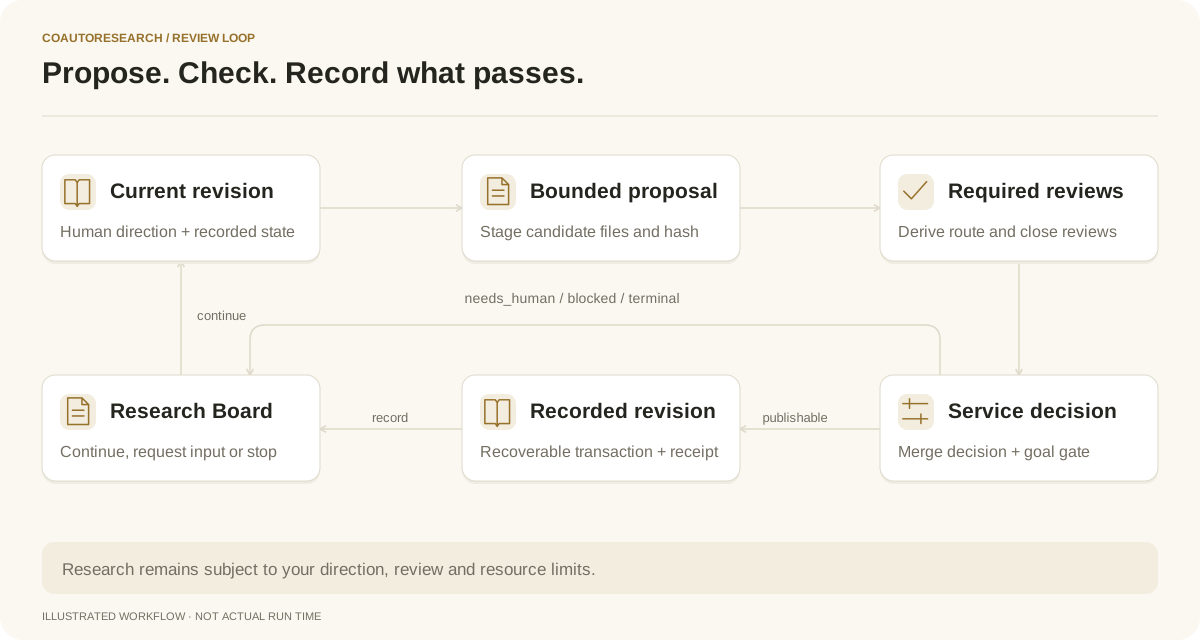
What the Diagram Means
The loop is linear enough for a human to follow.
Every invocation closes at most one trial boundary.
Plans, reports, result cards, reviews, and human briefs remain distinct proposal or audit artifacts until publication.
Review level and specialized coverage are derived from the staged material; the required reviewer set is not a worker assertion.
Claims become current only through a merge decision and receipt-backed transaction.
Human intervention is not an afterthought; it is part of the control system.
The output should be something the human can understand, defend, and revise.
Critical Path Control
Critical Path items are the dependencies required for a real deliverable: data, methods, evaluation, analysis results, figures, tables, manuscript assembly, and final export readiness. Bookkeeping can support those dependencies, but it is not itself a bottleneck.
If a research-critical resource is missing, the Resource Scout must work through the acquisition/substitution ladder: user-provided ongoing work, local caches, official download, alternate official year/version, alternate public dataset, scope-downgrade proposal, then a concrete human request. Once that ladder is exhausted for the active bottleneck, remaining audits or cleanup do not justify continuing the loop.
Manuscript Deliverables
Manuscript preparation uses two artifacts:
Artifact |
Purpose |
|---|---|
|
Always-current venue-format plan, evidence obligations, planned displays, and blockers. |
|
Exportable full-results manuscript blueprint containing only real, source-backed sections, results, figures, tables, references, and provenance. |
Before results exist, BLUEPRINT.md is only a stub that points to the plan and
Critical Path. The UI labels that state as a paper plan or research status, not
ready for paper writing. The Paper-Writing Pack is available only when the
blueprint is non-stub, complete, and free of blocking missing evidence.
The dashboard’s Generate paper action is a separate writing workflow. It uses an isolated snapshot of recorded v2 evidence, four scientific skills and local PDF tools. It does not execute new research. The resulting Paper is a draft with review notes, not confirmation that a venue’s scientific requirements have been met. See paper generation.
Collaboration boundary
Auxiliary chats can run alongside the main research session and inspect project context without writing research files. Add to research draft transfers a suggestion into the composer. The user reviews and sends it before it becomes an instruction to the main research process. This preserves the distinction between exploring an idea in conversation and applying it to research.
Control Surfaces
Surface |
What it controls |
|---|---|
|
Overall direction, scope, audience, and constraints. |
|
Service-owned current objective, executable bottleneck, claims, and readiness. |
Markdown companions |
Human-readable projections and legacy history; never a v2 control-flow bypass. |
Human interventions |
Explicit changes to scope, claim, venue, method, or priority. |
Review manifest and reviewer outputs |
Material-bound review closure at light, standard, full, or final level. |
Goal gate and publish receipt |
Derived stop/continue truth and proof of canonical publication. |
Gate states are distinct: continue, pass, needs_human, blocked,
paused_budget, no_viable_line, and killed_by_human. A completed trial,
approved plan, plausible venue fit, coherent manuscript architecture, or
targeted revision-ready draft is progress, not final pass.
Record validation and repair
Agents write authoritative structured JSON. After the phase write-boundary audit, the service validates the required bundle and generates missing or inconsistent registered Markdown views before plan approval or stage freezing. Valid richer views are retained, and JSON bytes are not rewritten just to format a companion. Manuscript prose remains a writing task. Approved plans, prior reviews, and committed stage material remain immutable.
Candidate card destinations and declared conflict resolutions are checked before review as well as at final merge. An invalid proposal that has not been frozen can be corrected in the same stage; changed reviewed material still requires a new stage. Complete current validation findings are passed to the correcting agent, so a long error list is not silently cut into successive repair attempts. These checks reduce mechanical repair work; they do not replace scientific review or guarantee that an agent will produce a correct proposal on its first attempt.
Compatibility
V1 projects remain readable without pretending their Markdown history is a v2 publication. The UI labels the synthesized board and trial cards as legacy, uses the fixed-eight reviewer fallback, and keeps canonical revision unset. Migration is additive, backup-first, idempotent, and reversible while no newer v2 work depends on it.
Research ownership
The shared record supports research ownership: the human should be able to explain why a claim exists, where the evidence came from, which alternatives were rejected, and what work remains open.